The Brave Music of Patrick Doyle – Exclusive interview

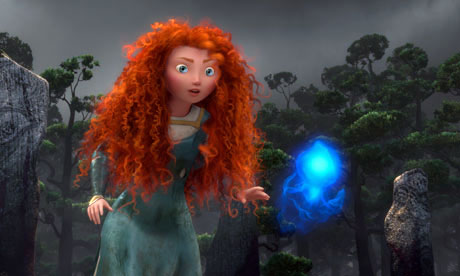
The new Disney/Pixar heroine is a princess with thick, curly red hair: she's Merida, the main character of Brave, the new animated film produced by the brilliant dream factory led by John Lasseter. This time, it's a joyously fairytale set in medieval Scotland. As always in Pixar films, a particular attention was paid to the musical score: after Randy Newman and Michael Giacchino, this time it happened to Scottish composer Patrick Doyle to put music on the amazing CGI imagery and landscapes of the most important and iconic animation studio of the world. The musician beloved by director/actor Kenneth Branagh, fresh from the success of his most recent works (the Marvel comic-book movie Thor and the prequel/remake Rise of the Planet of the Apes), dove into the project with enthusiasm and composed one of his most inspired scores in recent years. In this exclusive interview with ColonneSonore.net, Patrick Doyle talks about Brave, his collaboration with Kenneth Branagh and his personal vision of film music.
 ColonneSonore.net: How did you get involved to score Brave?At which stage were you approached to score the film?
Patrick Doyle: I was approached by [the co-director and the producer respectively] Brenda Chapman and Katherine Sarafian over three years ago. We met in San Francisco and I popped up from Los Angeles where I was visiting. We got on very well and a short time later, they asked me to be the composer. And like all the composers who work with them, the work begins very early on during the storyboarding process.
CS: The score sounds very much symphonic and classically-styled, with a lot of traditional Scottish/Celtic elements. Was this something planned since the beginning of the discussions with the filmmakers?
PD: The tone of the score was an ongoing discussion, as it is in all films. The sonorities of the picture grew organically and I always knew there would be traditional Celtic instruments but I felt it should only be used where completely appropriate and also intermingled with contemporary electronic sounds and of course, the symphony orchestra.
CS: The score has some very identifiable and clear themes and motifs. Do you usually start writing the score composing the main themes/leitmotivs? Or do you “find” them while writing for scenes?
PD: The themes of the film begin with the trailer, which unusually I was asked to write. And the very first trailer has a theme (which I call the “Brave theme”) which permeates through the score. The other strongly identifiable theme is the song “Noble Maiden Fair”.
CS: You already scored a couple of animated movies before Brave. What are the main challenges and also the main rewards about scoring for animation? How much different is than to write for a live action film?
PD: With regard to composing for animation, as opposed to live action film, the process is exactly the same. Animation and live action both have narrative and characters, and these are the two elements that are essential to capture in order for the score to find its voice.
CS: Pixar always considers the composer one of the key member of the overall creative team. Was this a pleasant experience for you?
PD: Working with Pixar was a hugely enjoyable experience and they consider music to be a very important part of the process.
CS: You recorded the score with the London Symphony Orchestra, a group very much close and dear to you. Can you describe what it means for you to work with them? When you’re writing, do you specifically thinks of the LSO?
PD: When I work with the LSO, I know that the playing will be world class and knowing the capabilities of the players, I write confidently for them as a result. They are consummate professionals.
CS: Last year you worked on a couple of really big blockbusters/franchise movies like Thor and Rise of the Planet of the Apes. They both required modern-sounding scores that we were not accustomed to hear from you. Did those scores contain a particular challenge for you?
PD: With regard to Rise of the Planet of the Apes and Thor, these were clearly very different scores for me in terms of their modern sound. When the zeitgeist changes then all artists have to be tuned into the seismic shift.
CS: What are according to you the main differences in the job of the contemporary film composer in respect to when you started writing for films back in late 1980s?
PD: If one is to compare the difference in the job of a contemporary film composer to the composer in the late 80s/ early 90s, it is the use of electronics and also the process of creating symphonic mock-ups.
CS: You maintained a fruitful and long-standing collaboration with director Kenneth Branagh over the years, for whom you composed some of your best scores to date. How would you describe your partnership with Mr. Branagh?
PD: My work with Kenneth Branagh is very special as he is a great friend and artist. I have the greatest respect for him and he affords me tremendous respect in return and I trust his judgment completely. There is a shorthand that has been there since our very first collaboration on Henry V, coupled with a lack of pretention and a great element of fun. All these things make the process for him and myself much smoother.
CS: I’ve always admired the opening title music from Much Ado ‘Bout Nothing. The piece is so exuberant, filled with joy, replete with dazzling orchestral colors and brimful of lyricism. It’s film music like we don’t hear anymore! What recollections do you have about that particular score?
PD: I am very proud of the Overture of Much Ado ‘Bout Nothing and it is a culmination of many years work, both working on a stage production of the play and also the film with Kenneth. At the moment, there are not opportunities to compose a score like Much Ado, but the world of music and film is cyclical and I am sure there will be opportunities to write in this style again.
CS: It seems you always like to go back and forth scoring both big Hollywood studio pictures and smaller European films. What are the biggest differences in relation to your work between these two film worlds?
PD: One of the huge differences is the budget and in Hollywood pictures, there are many more points of view to be considered. European films tend to be far more director-led. But both have the same elements to be addressed – character and story.
CS: You composed a number of works for concert-hall over the years. Did you find those experiences somewhat liberating in respect of the constraints of writing for films?
PD: I love composing music for feature films for this is my métier and raison d'etre. I also enjoy writing concert music as it makes a nice change but in many ways it is just as demanding because I have to set my own bar. I’m often asked this question, but I love writing for film where I find I have much more freedom than people realise to experiment with new sounds and ideas. I find both musical outlets liberating.
CS: To finish our conversation, I’d like to ask you a kind of “esoterical” question: What is film music according to Patrick Doyle?
PD: Film music is another character in the story onscreen and as a result, it is a very powerful element that can influence an audience’s emotional response to the imagery. Its worth for me has to be in creating an immediate visceral response and at the same time, as well as serving the picture, first and foremost, it should also stand up as an enjoyable audio experience.
CS: Patrick, thank you very much for your time.
PD: My pleasure. Arrivederci!
ColonneSonore.net wishes to thank Chantelle Woodnut (Air-Edel UK) for the help in setting up the interview. Many thanks to Patrick Doyle for his kindness.