Intervista esclusiva al compositore spagnolo Zacarías M. de la Riva
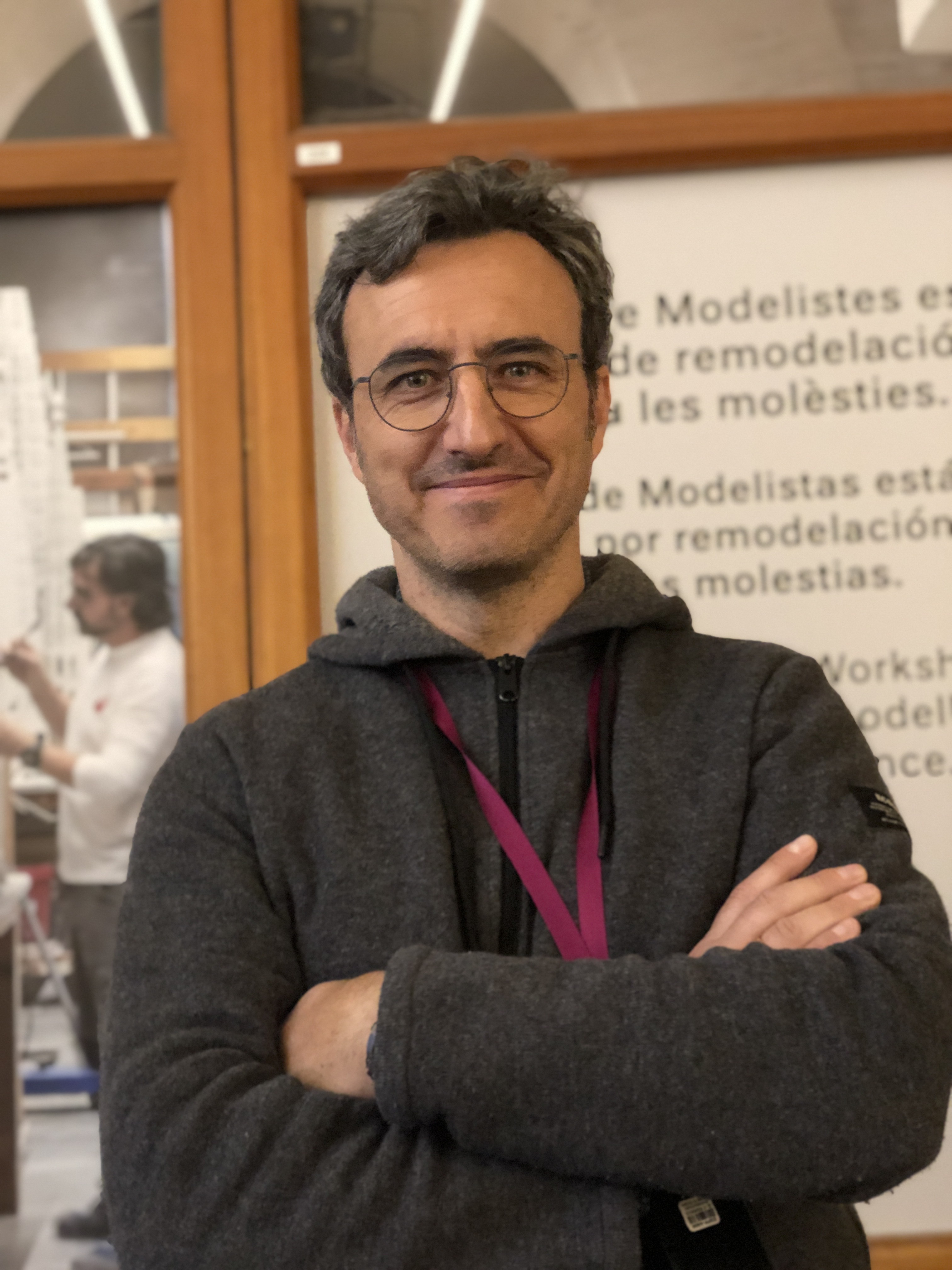
Una colonna sonora non è musica aggiunta a un film - Intervista a Zacarías M. de la Riva
Abbiamo avuto l’enorme piacere di incontrare uno dei più affermati, pluripremiati e candidati (Alcalá de Henares Short Film Festival, Goya Awards, Málaga Spanish Film Festival, Gaudí Awards, Jerry Goldsmith Awards, Medina Awards, IFMCA, Premios de la Música para el Audiovisual Español, etc. etc.) e autorevoli tra i compositori spagnoli della generazione cresciuta a pane e Williams, Silvestri, Horner, Vangelis e Morricone negli anni ‘80, il Maestro Zacarías M. de la Riva. Un vero esperto di soundtracks di Genere, con una carriera iniziata nel 2001 e oltre 70 colonne sonore all’attivo, spaziando con disinvolta originalità e bravura tra animazione, horror, commedia, azione e thriller, e la nostra chiacchierata con Lui ha accresciuto l’ammirazione che abbiamo da tempo nei suoi confronti.
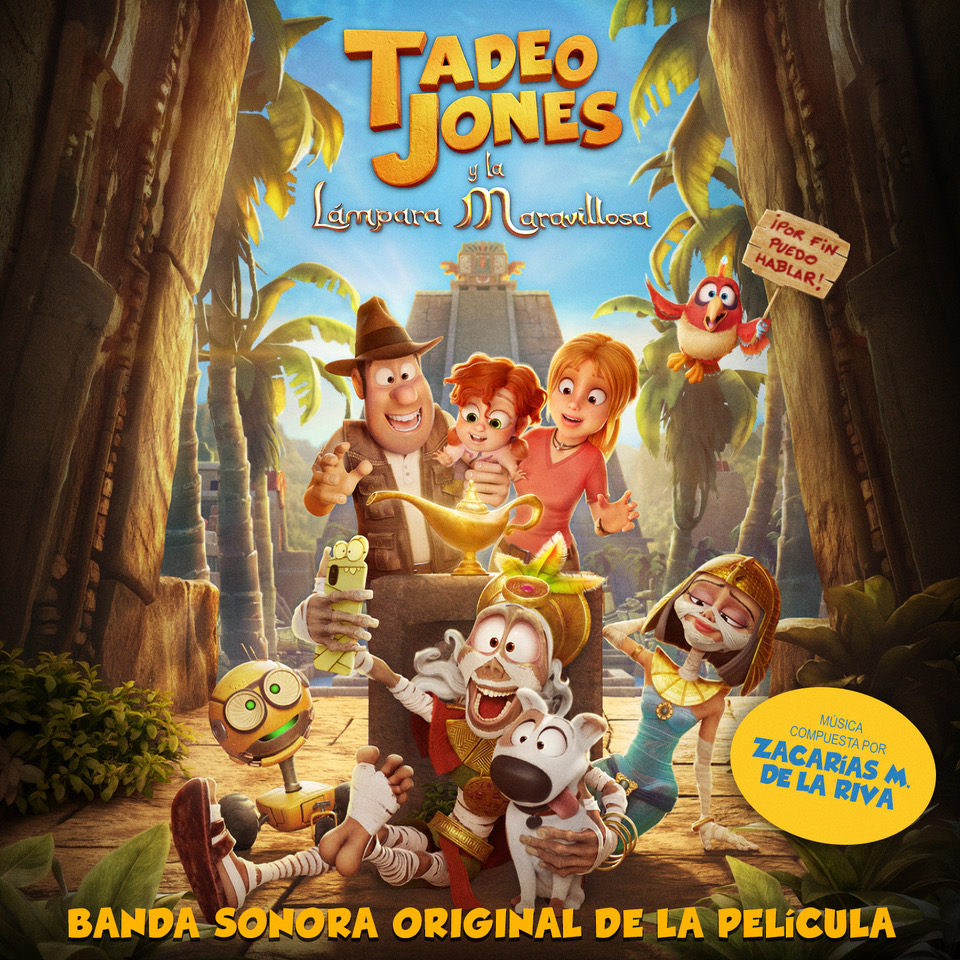
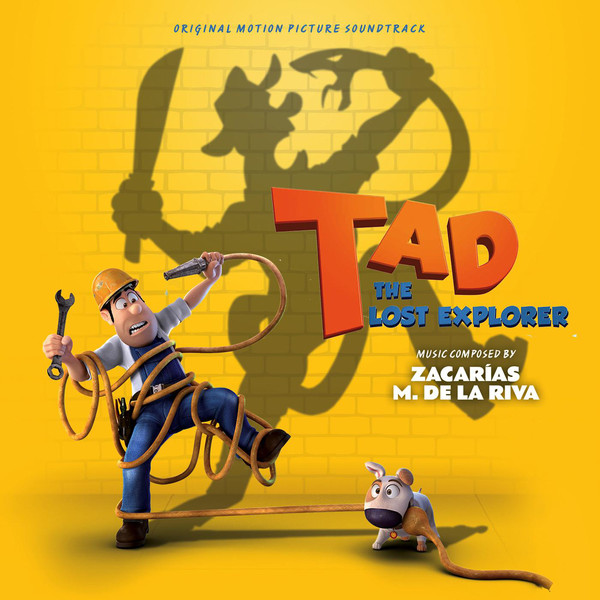
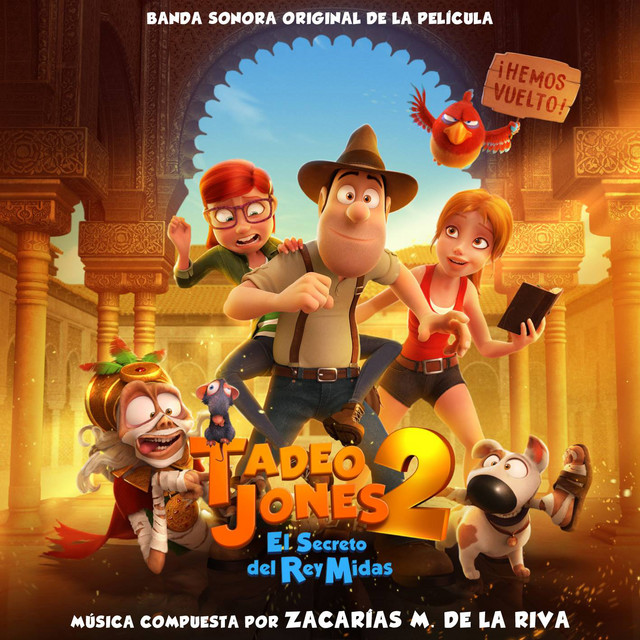
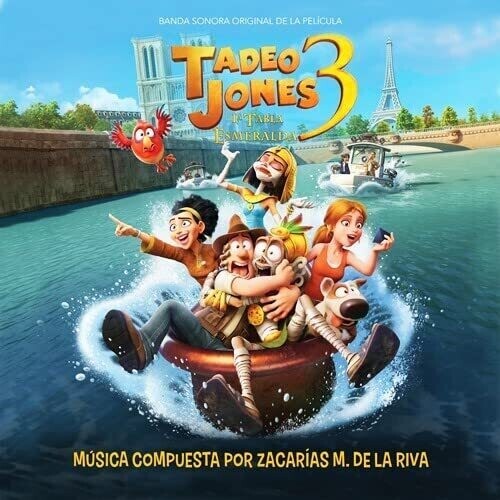
Colonne Sonore: John Williams ha il celebre Indiana Jones ma anche tu ha il tuo Mr. Jones, seppur un personaggio d’animazione: Taddeo, un muratore scambiato per un archeologo, sempre coinvolto in svariate peripezie e missioni pericolose. Quest’anno sei giunto a musicare la quarta avventura di Taddeo Jones su grande schermo – anche se tutto iniziò nel 2004 con il corto Tadeo Jones –, dopo Le avventure di Taddeo l’esploratore (Las aventuras de Tadeo Jones) del 2012, Taddeo l’esploratore e il segreto di re Mida (Tadeo Jones 2: El secreto del rey Midas) del 2017 e Taddeo l’esploratore e la tavola di smeraldo (Tadeo Jones 3. La tabla Esmeralda) del 2022, ora tocca a Taddeo l’esploratore e la lampada magica (Tadeo Jones y la lámpara maravillosa). 22 anni a commentare su pentagramma le gesta di Taddeo non è cosa da poco: quanti temi hai scritto, tra citazioni a John Williams e ad Alan Silvestri sufficientemente rintracciabili, e quanto l’impegno profuso in tutti questi anni per mantenere alta e varia l’attenzione su queste divertenti avventure animate per grandi e piccini?
Zacarias M. de la Riva: Ho sinceramente perso il conto, ma devono essere tra i venti e i venticinque leitmotiv nell’intera saga. Il meccanismo ha funzionato nello stesso modo fin dall’inizio: già il cortometraggio del 2004 aveva il tema di Taddeo, mentre nel secondo corto è stato introdotto quello di Jeff, il cane. Poi, con il primo film, nel 2012, è tornato il tema di Taddeo e si è aggiunto un intero nuovo parco di temi: Paititi, la tavoletta, i cattivi della società Odysseus e molti altri. Da allora, ogni film ne ha aggiunti quattro, cinque o sei, ed è così che si arriva a quella cifra. In questo quarto film c’è un nuovo antagonista, Suleiman il Magnifico, con un suo motivo di cinque note, e un tema per Oli, la figlia di Taddeo e Sara. Ma ciò che mi diverte di più è far tornare i leitmotiv del passato: i personaggi viaggiano indietro nel tempo e Paititi ritorna, quindi con lui torna anche il suo tema dal primo film; torna il tema della Mummia, così come quello di Sara, che in realtà è il tema d’amore tra i due, ora però con una luce più matura. È proprio qui che risiede il vero impegno di questi ventidue anni. Scrivere musica nuova è la parte divertente; la difficoltà sta nel mantenere coerente tutta questa famiglia di temi, affinché chi è cresciuto con il primo film possa ancora riconoscere oggi il suo eroe, mentre ogni nuova avventura richiede colori nuovi. Quanto a Williams e Silvestri, sono molto più che semplici riferimenti: sono la musica con cui sono cresciuto e ai quali ho reso omaggio apertamente. In Taddeo l’esploratore e il segreto di re Mida c’è un omaggio diretto allo “Scherzo for Motorcycle and Orchestra” di Indiana Jones e l’ultima crociata, quando Taddeo, la Mummia e il gruppo scendono nelle catacombe. E in questo quarto film c’è un omaggio a Ritorno al futuro nascosto all’interno di “The Tube Chase”. Scovarli fa parte del gioco.

CS: Secondo te esiste una regola nel musicare l’Avventura?
Zacarias M. de la Riva: Se ce n’è una, è la chiarezza. La musica d’avventura deve dichiarare in modo forte e chiaro ciò che prova l’eroe, come faceva Williams con Indiana Jones o Silvestri con Ritorno al futuro, e deve continuare ad andare avanti: accelerare, svoltare, saltare e ripartire insieme alle immagini. E ha bisogno di melodia. Un’avventura necessita di temi che si possano canticchiare uscendo dal cinema; non è nostalgia, è semplicemente lo strumento che funziona meglio in questo genere. Essere diretti con le emozioni sembra facile, ma in realtà è la cosa più difficile da fare bene.
CS: Sei nato in Spagna nella radiosa, vivace e artisticamente attiva Barcellona ma ti sei laureato nel famoso Berklee College of Music di Boston in USA, specializzandoti in composizione di musica applicata alle immagini. Quando nasce la tua passione per la Musica ed in particolare per il mondo delle colonne sonore? Chi sono i tuoi compositori di Film Music e di musica classica (o altri generi) di riferimento, coloro i quali ti hanno ispirato musicalmente?
Zacarias M. de la Riva: Sì, sono nato a Barcellona e ci ho vissuto fino ai vent’anni, quando sono partito per il Berklee. Dopo Berklee sono tornato a Barcellona e nel 2000 mi sono trasferito a Madrid, dove vivo tuttora. La mia passione per la musica, e in particolare per la musica cinematografica, risale a quando ero molto piccolo e ha tutto a che fare con i film d’avventura degli anni Ottanta: Indiana Jones, E.T., Star Wars e Lo squalo, che è un po’ precedente. Amavo tutto quel cinema hollywoodiano, e questo mi ha portato direttamente alla musica dei compositori che lo avevano creato: John Williams, Jerry Goldsmith, Alan Silvestri, James Horner. Poi è arrivato Ennio Morricone, soprattutto attraverso i film di Tornatore, e Vangelis, la cui musica adoravo. È questo il seme da cui tutto è nato. Solo più tardi, crescendo, ho capito che era proprio lì che era cominciato tutto: che un’orchestra poteva diventare una narratrice e che avrei potuto davvero vivere scrivendo musica per il cinema. Al Berklee ho imparato il mestiere che sta dietro a quella magia, ma i compositori che mi hanno fatto innamorare di quest’arte sono proprio loro.
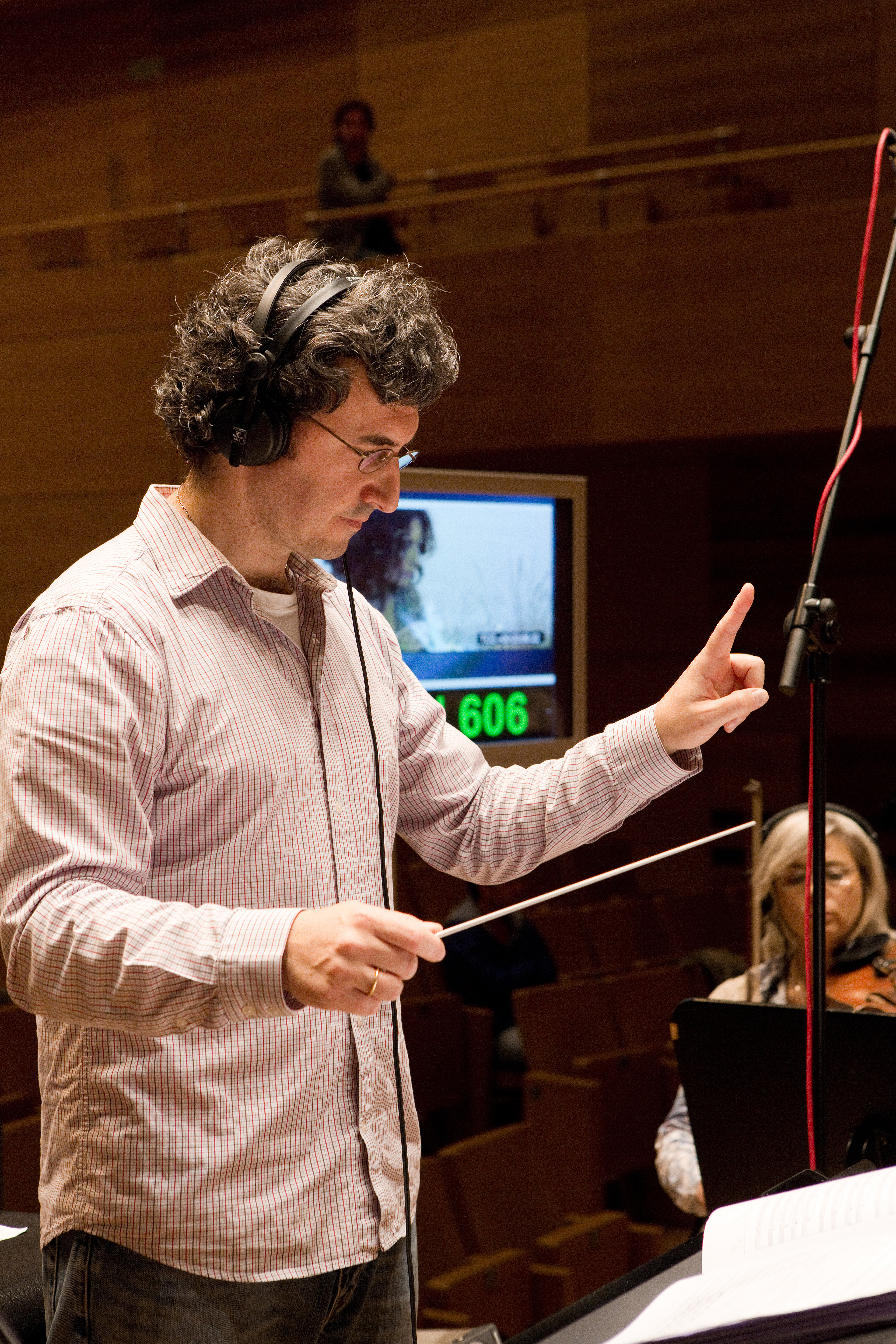
CS: Nella tua filmografia spiccano differenti generi cinematici. Giusto per citare i più noti: l’avventura d’animazione El Cid: La leggenda (El Cid: La leyenda, 2003); l’horror Dal profondo delle tenebre (Beneath Still Waters, 2005) di Brian Yuzna; il thriller horror dell’italiano Stefano Bessoni Imago Mortis (2009); il fantascientifico Automata (Id. - 2014) con Antonio Banderas; la commedia Sin instrucciones (Id. – 2024). Qual è la maggiore difficoltà o il maggior privilegio per un compositore di musica per le immagini quando si trova dinnanzi a così tanti generi con a disposizione una tavolozza orchestrale ad ampio spettro?
Zacarias M. de la Riva: Per me è il privilegio più grande di questo lavoro e direi che ogni genere ti insegna qualcosa che gli altri non possono insegnarti. Mi piace spiegarlo attraverso i colori: l’animazione dipinge con i colori primari, con una tavolozza brillante e limpida, nella quale la musica non può essere ambigua; un thriller o un dramma come Sotto lo zero (Below Zero, 2021) invece, lavora sui grigi e sulle mescolanze, ricchi di sfumature e ombre. Passare da una tavolozza all’altra ti mantiene onesto come compositore: non puoi ripetere i tuoi trucchi, devi ascoltare ciò di cui ha bisogno ogni storia. Anche l’orchestrazione cambia a seconda della storia. La grande orchestra è adatta a Taddeo, Automata o Hierro (2009), mentre Below Zero, per esempio, è una partitura ibrida: archi e un corno solista, mentre tutto il resto è elettronico. Le commedie e le commedie romantiche che ho realizzato sono più leggere, con una piccola orchestra di archi e alcuni legni poggiata su pianoforte, arpa, chitarra, basso e batteria, con un suono quasi acustico. E alcune colonne sonore sono interamente elettroniche, senza nient’altro. Ogni film ti dice di cosa ha bisogno.
CS: Come ti poni davanti all’utilizzo, il più delle volte spropositato e confondente, della temp track sul montaggio non definitivo di un film o serie per il quale ti chiedono di scrivere musica originale? Logicamente rispondi soltanto se sei incappato in tal metodologia tipica dei montatori.
Zacarias M. de la Riva: Mi sono imbattuto nella temp track molte volte, naturalmente. Cerco di leggerla come un’informazione, piuttosto che come un modello: una temp ti dice cosa stanno provando il regista e il montatore di fronte a una scena, quale energia o emozione manca loro, e questo è davvero utile. Il pericolo è ben noto: dopo aver visto il montaggio cento volte, tutti finiscono per innamorarsi della temp. Il mio metodo consiste nel capire cosa sta facendo la temp dal punto di vista drammaturgico e poi metterla da parte, rispondendo alla stessa domanda con la mia voce. Se mi limitassi a imitarla, il film riceverebbe una fotocopia invece di una colonna sonora.
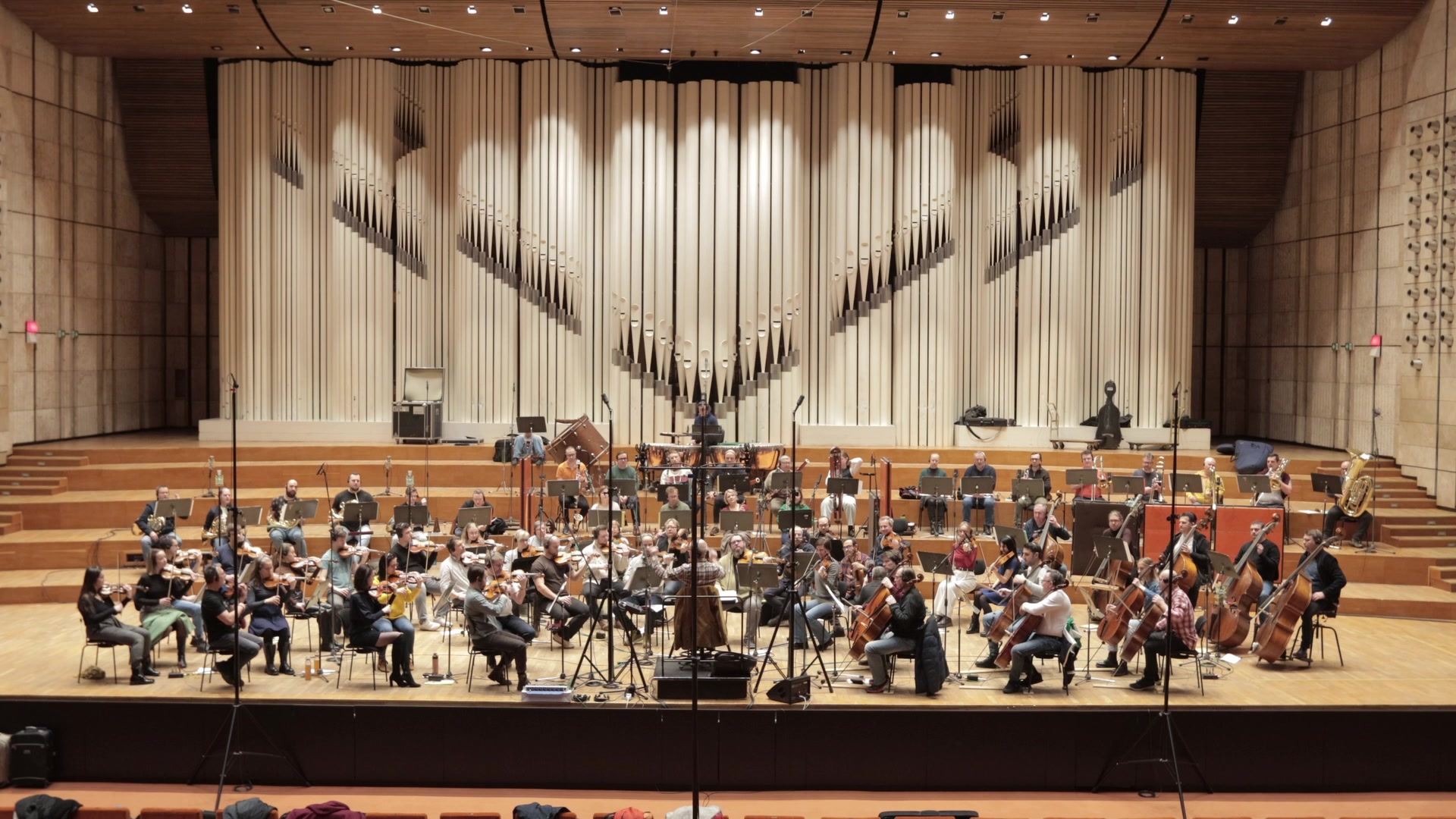
CS: Se dovessi raccontarti compositivamente, utilizzando una o più tue partiture, quale sarebbero le più rappresentative e perché?
Zacarias M. de la Riva: Curiosamente, non sceglierei i film d’animazione, anche se rappresentano la parte più consistente della mia filmografia. L’animazione è qualcosa che ho imparato a fare bene nel corso di molti anni, ma non è il tipo di scrittura che mi viene più naturale. La colonna sonora più vicina al mio cuore, al mio modo di intendere ciò che dovrebbe essere la musica per il cinema, è Automata. Non sono sicuro che dipenda dal film in sé o dal fatto che sia fantascienza, un genere che amo come spettatore. Forse è proprio per questo che quel tipo di musica mi risulta più facile e naturale da scrivere. Dopo Automata direi Hierro, che, curiosamente, è dello stesso regista, Gabe Ibáñez, ed è molto vicino al tipo di musica che vorrei scrivere più spesso.
CS: Qual è il Genere di film che ancora non hai in carnet per cui ti piacerebbe comporre la colonna sonora? E con quale regista internazionale agogneresti lavorare?
Zacarias M. de la Riva: Un musical. Mi piacerebbe moltissimo scriverne uno; anzi, ho una canzone che ho scritto molti anni fa e che, secondo me, funzionerebbe magnificamente in quel formato, ed è ancora in attesa del suo film. Quanto ai registi, mi sarebbe piaciuto moltissimo lavorare con Krzysztof Kieślowski e con Alfred Hitchcock. Tra quelli che lavorano oggi, David Fincher o Giuseppe Tornatore, due registi che amo. E Hayao Miyazaki!
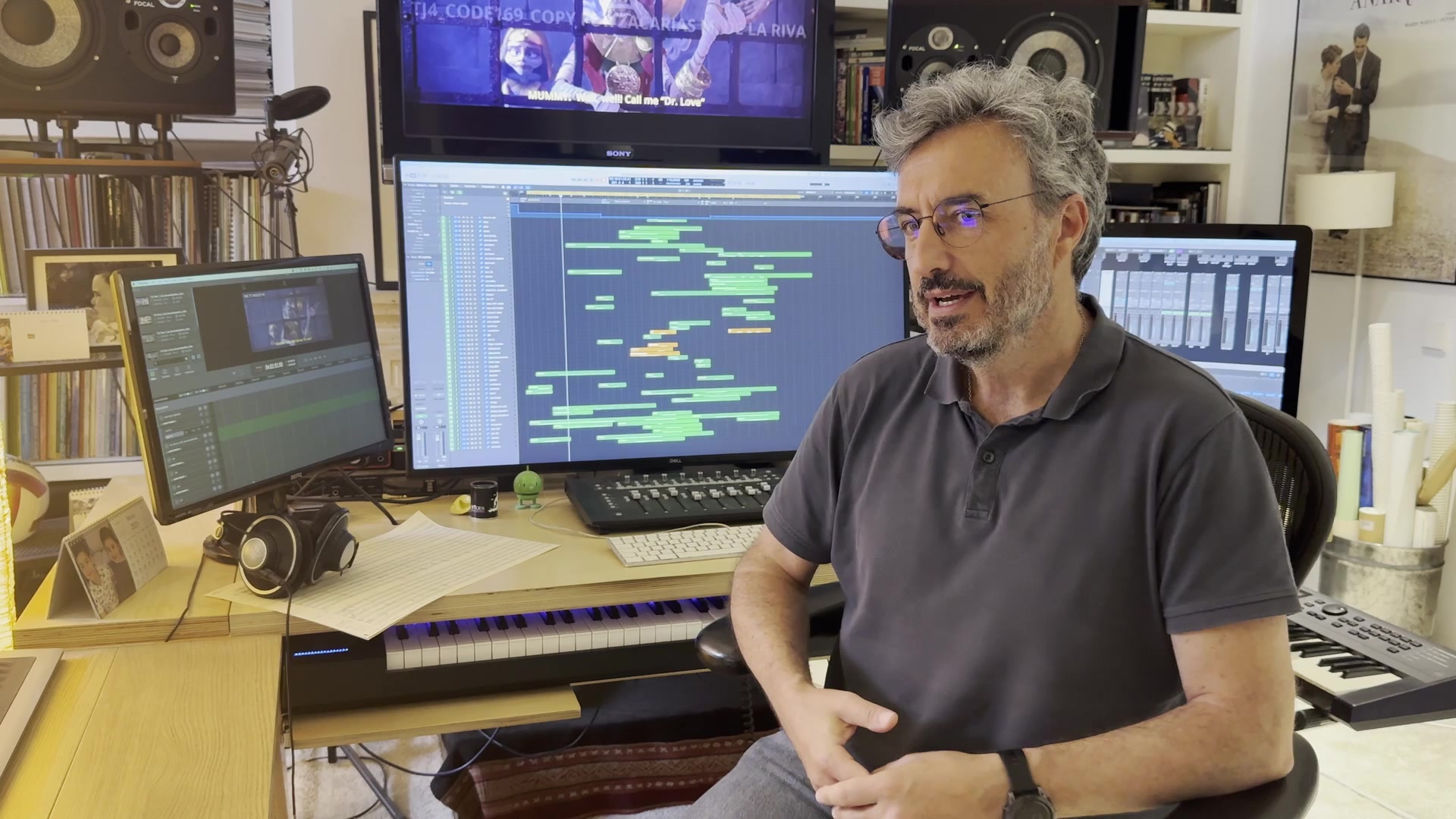
CS: Cos’è per te la Musica per Immagini?
Zacarias M. de la Riva: Narrazione. Una colonna sonora non è musica aggiunta a un film: significa decidere ciò che il personaggio prova in ogni inquadratura e dirlo attraverso la musica, qualunque forma essa assuma: una grande orchestra, un quartetto d’archi, un’arpa, un pianoforte, una chitarra. Metà di ciò che provi in una sala cinematografica non lo vedi: lo ascolti. Quella metà invisibile è il mio lavoro e, dopo più di vent’anni, continuo a considerarlo il lavoro più bello del mondo.
English Version:
Colonne Sonore: John Williams has the famous Indiana Jones, but you also have your Mr. Jones, even if he’s an animated character: Taddeo, a builder mistaken for an archaeologist, always caught up in all sorts of adventures and dangerous missions. This year, you’ve scored the fourth Taddeo Jones adventure on the big screen – even though it all started in 2004 with the short Tadeo Jones – following Las aventuras de Tadeo Jones in 2012, Tadeo Jones 2: El secreto del rey Midas in 2017, and Tadeo Jones 3. La tabla Esmeralda in 2022. Now it’s time for Tadeo Jones y la lámpara maravillosa. 22 years commenting on Taddeo’s exploits on Pentagramma isn’t a small feat: how many pieces have you written, with references to John Williams and Alan Silvestri that are easy enough to trace, and how much effort have you put in over all these years to keep the attention high and varied on these fun animated adventures for both kids and grown-ups?
Zacarias M. de la Riva: I have honestly lost count, but it must be somewhere between twenty and twenty-five leitmotifs across the whole saga. It has worked the same way from the very beginning: the 2004 short already had Tadeo's theme, and the second short introduced the theme for Jeff, the dog. Then the first film, in 2012, brought Tadeo's theme back and added a whole new set: Paititi, the tablet, the villains of the Odysseus corporation and several more. Since then every film has added four, five or six new ones, and that is how you get to that figure. In this fourth film there is a new villain, Suleiman the Magnificent, with his own five-note motif, and a theme for Oli, Tadeo and Sara's daughter. But what I enjoy most is bringing old themes back: the characters travel to the past and Paititi returns, so the Paititi theme from the first film returns with it; the Mummy's theme is back, and so is Sara's theme, which is really the love theme between the two of them, now in a more mature light. That is where the real effort of these 22 years lies. Writing new music is the fun part; the hard part is keeping that whole family of themes coherent, so that someone who grew up with the first film still recognises his hero today, while every new adventure asks for new colours. As for Williams and Silvestri, they are much more than references: they are the music I grew up with, and I have paid tribute to them openly. In Tadeo Jones 2 there is a direct homage to the "Scherzo for Motorcycle and Orchestra" from Indiana Jones and the Last Crusade, when Tadeo, Mummy and the group go down into the catacombs. And in this fourth film there is a homage to Back to the Future hidden inside "The tube chase". Finding them is part of the game.
Colonne Sonore: Do you think there’s a rule when it comes to scoring Adventure?
Zacarias M. de la Riva: If there is one, it is clarity. Adventure music has to state loudly and clearly what the hero feels, the way Williams did with Indiana Jones or Silvestri with Back to the Future, and it has to keep moving forward: accelerate, turn, jump and start again with the image. And it needs melody. An adventure needs themes you can hum on your way out of the cinema; that is not nostalgia, it is simply the tool that works best in this genre. Being direct with emotion sounds easy, and it is actually the hardest thing to do well.
Colonne Sonore: You were born in Barcelona but graduated from Berklee... When did your passion for Music, and in particular for film scores, begin? Who are your reference composers?
Zacarias M. de la Riva: Yes, I was born in Barcelona and lived there until I was twenty, when I left for Berklee; after Berklee I came back to Barcelona, and in 2000 I moved to Madrid, where I have lived ever since. My passion for music, and for film music in particular, goes back to when I was very small, and it has everything to do with the adventure films of the eighties: Indiana Jones, E.T., Star Wars, and Jaws, which is a little older. I loved all that Hollywood cinema, and it led me straight to the music of the composers behind it: John Williams, Jerry Goldsmith, Alan Silvestri, James Horner. Then came Ennio Morricone, above all through Tornatore's films, and Vangelis, whose music I adored. That is the seed. Only later, when I was older, did I understand that this was where it had all started, that an orchestra could be a storyteller, and that I could actually make a living writing music for films. At Berklee I learned the craft behind that magic, but the ones who made me fall in love with this art are those composers.
Colonne Sonore: Your filmography spans different genres: El Cid, Beneath Still Waters, Imago Mortis, Automata, Sin instrucciones... What is the greatest difficulty or the greatest privilege for a composer when faced with so many genres?
Zacarias M. de la Riva: For me it is the greatest privilege of this job, and I would say each genre teaches you something the others cannot. My way of explaining it is with colours: animation paints with primary colours, a bright, clear palette where the music cannot be ambiguous, while a thriller or a drama like Below Zero works in greys and mixtures, full of nuance and shadow. Jumping between those palettes keeps you honest as a composer: you cannot repeat your tricks, you have to listen to what each story needs. And the instrumentation changes with the story too. The full orchestra is right for Tadeo, Automata or Hierro, but Below Zero, for instance, is a hybrid score: strings and a solo horn, and everything else electronic. The comedies and romantic comedies I have done are lighter, a small orchestra of strings and a few woodwinds resting on piano, harp, guitar, bass and drums, an almost acoustic sound. And some scores are pure electronics and nothing else. Each film tells you what it needs.
Colonne Sonore: How do you approach the use, often excessive and confusing, of the temp track?
Zacarias M. de la Riva: I have met the temp track many times, of course. I try to read it as information rather than as a model: a temp tells you what the director and the editor are feeling about a scene, what energy or emotion they are missing, and that is genuinely useful. The danger is well known, everyone falls in love with the temp after seeing the cut a hundred times. My method is to understand what the temp is doing dramatically, and then put it away and answer that same question with my own voice. If I only imitated it, the film would get a photocopy instead of a score.
Colonne Sonore: If you were to tell your story through composition, using one or more of your scores, which would be the most representative and why?
Zacarias M. de la Riva: Curiously, not the animated films, even though they are the larger part of my filmography. Animation is something I have learned to do well over many years, but it is not the kind of writing that comes to me most naturally. The score closest to my heart, to my way of understanding what film music should be, is Automata. I am not sure whether it is the film itself or the fact that it is science fiction, a genre I love as a viewer. Perhaps that is why that kind of music feels easier and more natural for me to write. After Automata I would say Hierro, which, interestingly, is by the same director, Gabe Ibáñez, and is very close to the music I would like to make more often.
Colonne Sonore: What is the film genre you haven’t tackled yet but would like to compose for? And which international director would you be eager to work with?
Zacarias M. de la Riva: A musical. I would love to write one; in fact I have a song I wrote many years ago that I think would work beautifully in that format, and it is still waiting for its film. As for directors, I would have loved to work with Krzysztof Kieślowski and with Alfred Hitchcock. Among those working today, David Fincher or Giuseppe Tornatore, two directors I love. And Hayao Miyazaki!
Colonne Sonore: What does Music for Visual Media mean to you?
Zacarias M. de la Riva: Narration. A score is not music added to a film: it is deciding what the character feels in every shot and saying it with music, whatever form that music takes: a full orchestra, a string quartet, a harp, a piano, a guitar. Half of what you feel in a cinema you do not see, you hear it. That invisible half is my job, and after more than twenty years I still find it the most beautiful job in the world.